PammyPanel
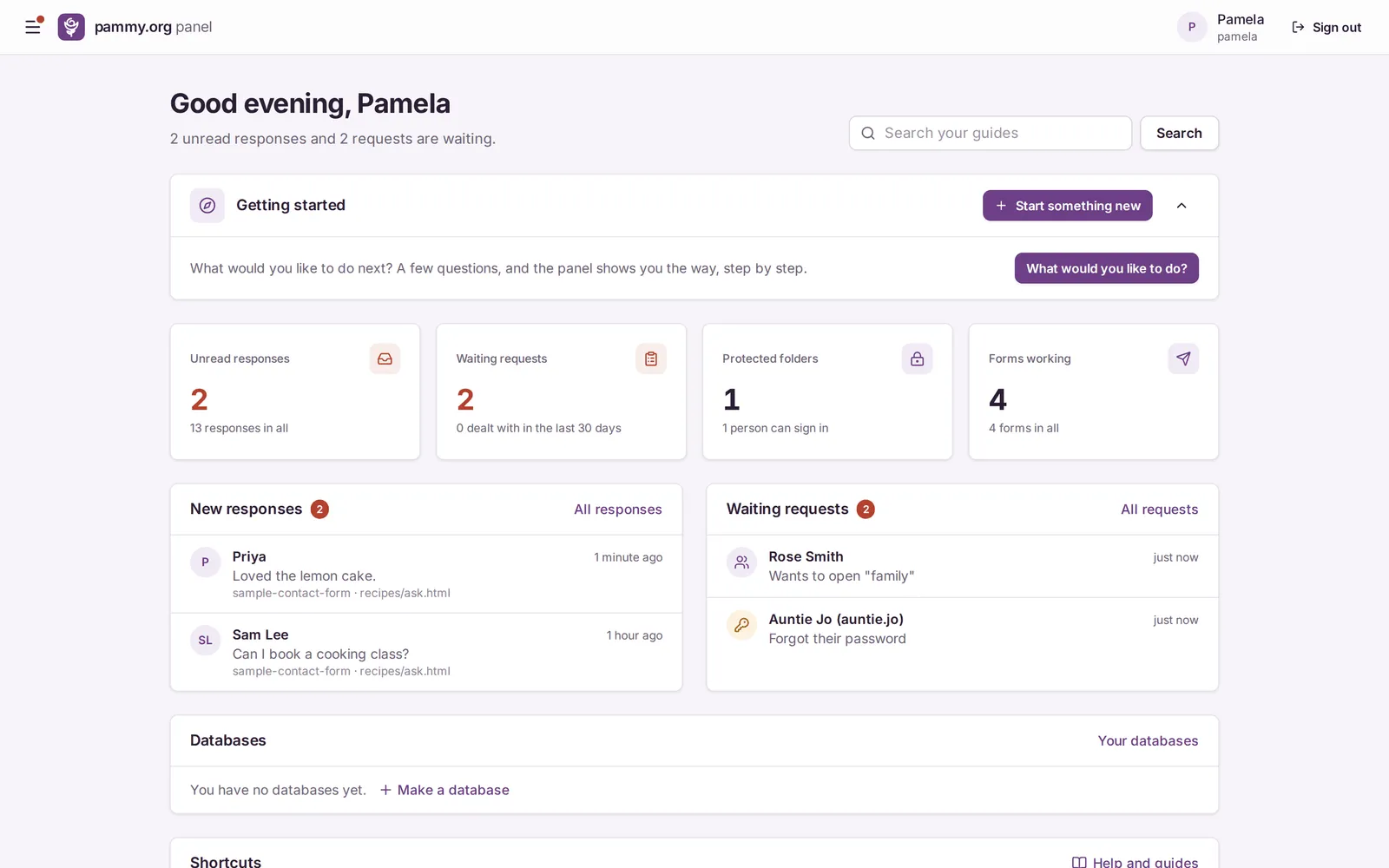
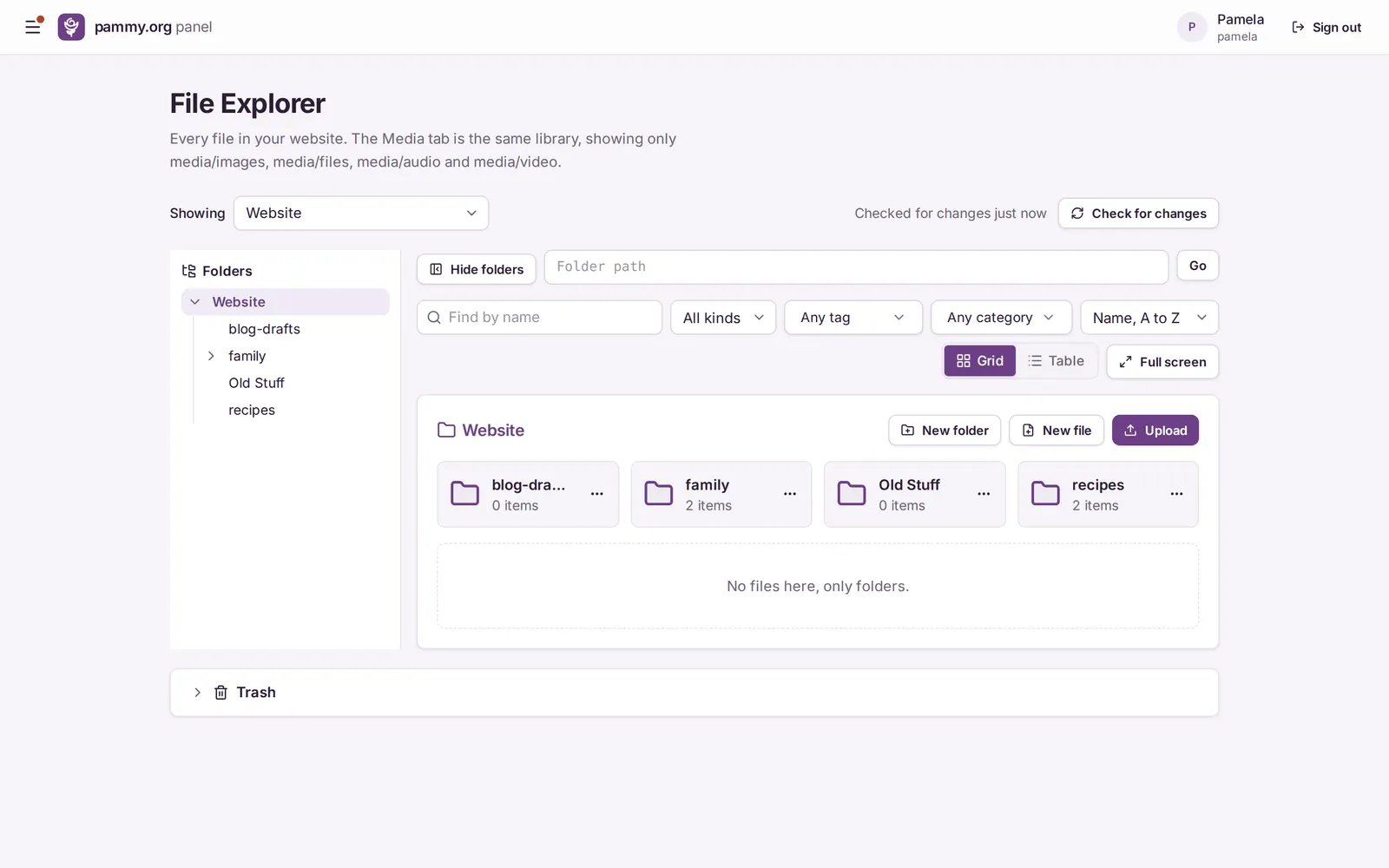
A self-hosted control panel that lets a non-technical owner run her websites, forms, media and databases from a phone.
$ cat architecture.svgAt a glance
$ cat the-problem.mdThe problem
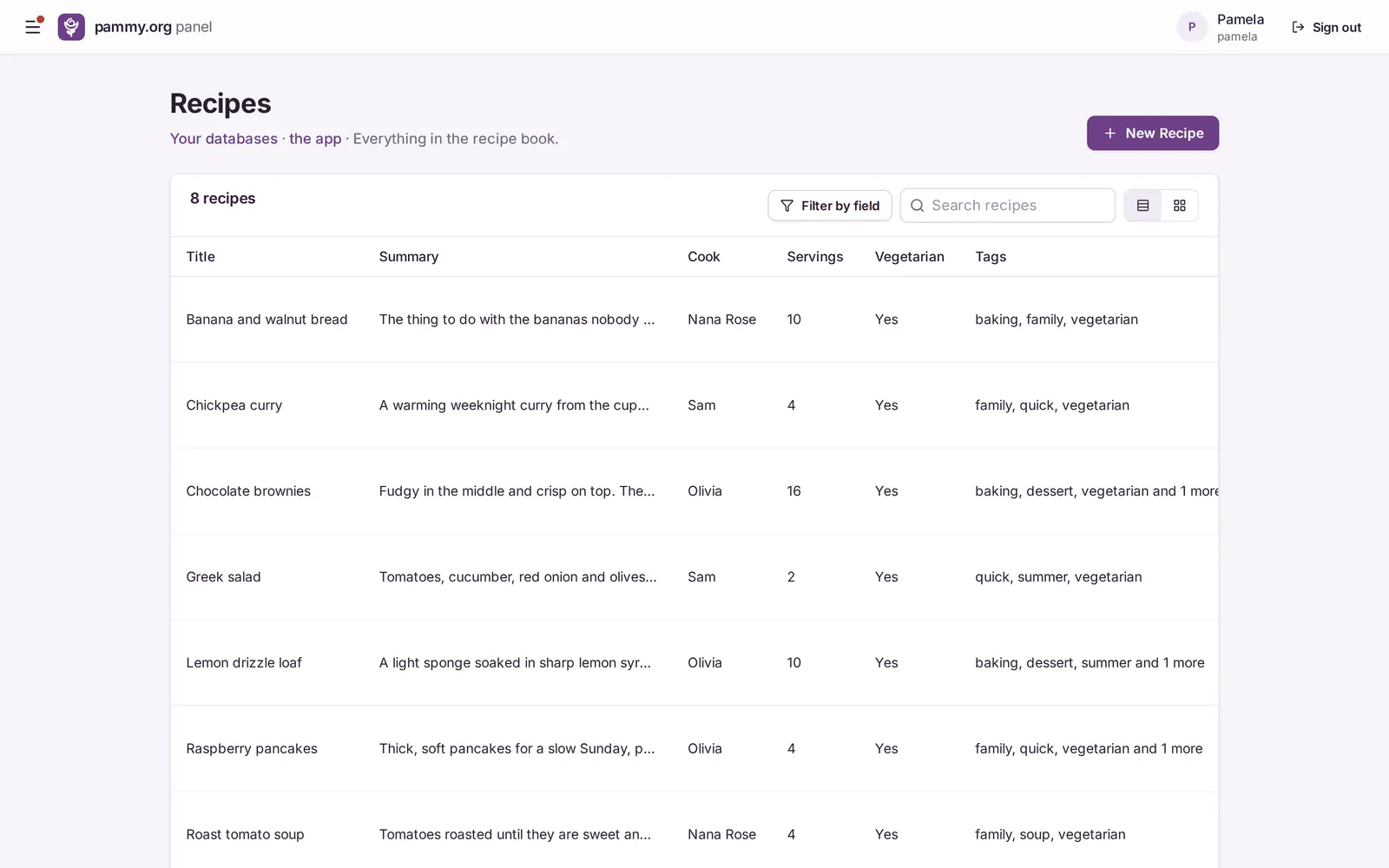
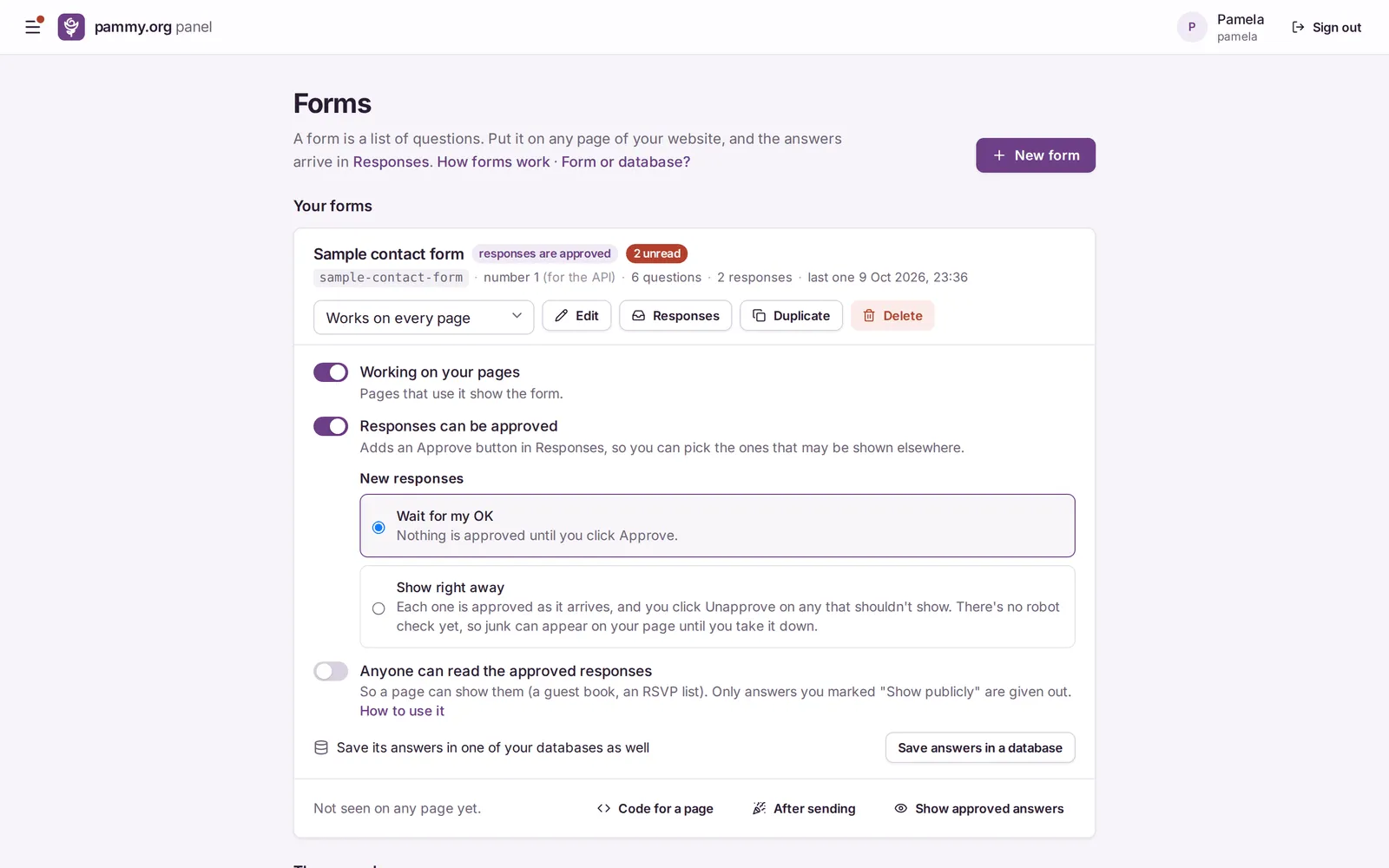
Pamela built websites in the FTP days. She knows HTML and CSS, some JavaScript and very little SQL. She wanted interactive sites (a blog, a guest book, an RSVP list, a recipe book) without handing a stranger root on her server or learning a hosting dashboard. PammyPanel gives her those features in plain words, with guides written for her.
It now runs two live sites: pammy.org for one owner, and lesfleursdelanuit.com, a five-person setup that also hosts other apps.
$ cat architecture.mdArchitecture
- Modules. Each feature (forms, media, Studio, hosts, people, the gate) is a package with its own server code, pages and migrations. A site profile decides which modules a site gets.
- Back end: Node.js and TypeScript on Fastify, with Postgres and MariaDB, and passkeys for sign-in.
- Front end: React, Vite and Tailwind, plus Lit web components that visitors’ pages embed (
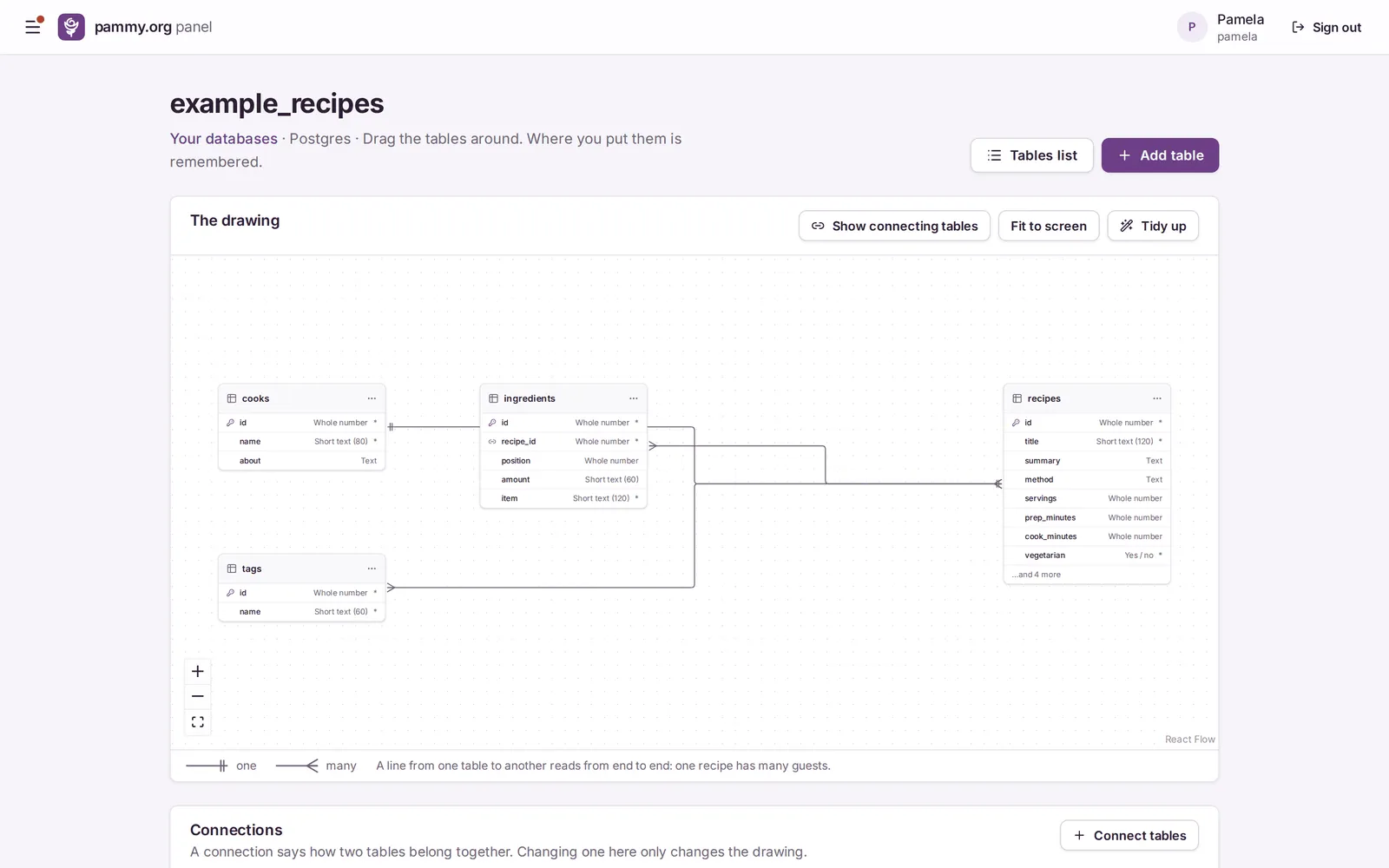
<pammy-form name="rsvp">). - Studio: a visual database workspace over the owner’s MariaDB and Postgres, with a table canvas, rich-text fields and a record picker for connected rows.
$ cat security-boundaries.mdSecurity boundaries
The web app runs unprivileged. File, routing, database and mail work goes to small helper services over Unix sockets, started by systemd socket activation, each with one narrow job. Hosted apps and their databases run in rootless Podman containers under Quadlet. Domains, hosts and routes are rendered into nginx config and checked with nginx -t before anything goes live.
$ cat testing-and-deployment.mdTesting and deployment
About 100,000 lines of TypeScript, with 71 unit test files and 65 Playwright end-to-end specs. Every release goes through a build that runs the type checks and both test suites, then a verify script on the live server checks services, nginx, permissions and pages before the release counts as installed. The latest full run: 2,956 checks passed, 0 failed.
$ cat whats-next.mdWhat’s next
Shared contracts between modules, a Supabase-like backend for authentication and realtime data across Postgres and MariaDB, and narrower helper permissions.
$ ls screenshots/On screen
From the test and demo servers, so the people and data shown are made up or public samples.